
• 4 Posts
  • 70 Comments
Joined 2 years ago
cake
Cake day: June 20th, 2023

help-circle


  • I think this might partially be a case of different uses of the word ‘burner’ - what they describe is not strong opsec, but it is a way to reduce how much you provide for free (which is often more work for the company to get). By this, I mean not providing so many photos to track your every social visit and movement, not immediately providing life updates (ie, relationships, purchases).

    Will meta find out most of this? yes. But I suspect it will be slower, more error prone, and sometimes more costly. Which don’t seem like a bad thing. Is there a good technical term for this? Hardening?

    Also, I’ll note that the point of the suggestions is to reduce noise in a persons life, not to go off the grid. I think the blog is trying to be more about curtailing and removing sources of distraction.


  • The topic is important, the timing is good (just in time for some new-years resolutions), and the writing is effective. Thank you for taking on the project.

    I had hoped that the first suggestion in part 1 would be more accessible than ‘delete the accounts and create burner accounts’ - we’ve chosen the most effective but biggest ask, and I don’t think this post quite provides the infrastructure required for many people to make the change. FB is used by many folks as social media; the keeping track of friends, events, and family can’t really be done from a burner account (your messages alone will identify you entirely to meta).

    And I have a personal pet peeve on this topic that’s triggered by the last section: I believe that mindfulness is a good way to improve internet use, but I think we’ve proven as a society that most people can’t implement this sort of self-reflection and intentionality without more structure. Where’s the tooling to remove dark patterns, automatically ask these questions after an app use, etc. ?


  • Let’s include the whole paragraph at least.

    Apertus was developed with due consideration to Swiss data protection laws, Swiss copyright laws, and the transparency obligations under the EU AI Act. Particular attention has been paid to data integrity and ethical standards: the training corpus builds only on data which is publicly available. It is filtered to respect machine-readable opt-out requests from websites, even retroactively, and to remove personal data, and other undesired content before training begins.


  • Thank you for fleshing out your world model and theory. I think that this model falls short of a source (and contradict some other AI-pessimistic economics predictions; namely a crash in computing cost and in crypto), but could be developed into something I’d find compelling.

    Let me brainstorm aloud about what I think this world model predicts that we might have data on…

    Did we see a crash in ISP prices, home and industry internet use, domain hosting, or other computing services in the dotcom bubble? That situation seems extremely analagous; but my vibe was that several of these did not drop (ISP price I suspect was stable), and some of these saw a dip but stayed well above early-internet rates (domain hosting)? I feel like there’d be a good analogy here, but I’m struggling with a way to operationalize.

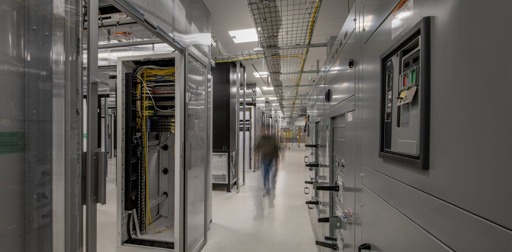
    I mentioned a use for compute that your reply didn’t cover: crypto mining. Do we have evidence that the floor on crypto is well below datacenter operating costs (across exploitative coins as well)? I vaguely remember a headline in this direction. Another use case I don’t see drying up: cheating on essay assignments.

    More broadly, this model predicts that all compute avenues are much lower payoff than datacenter operating costs. I think I’d need to see this checked against an exhaustive HPC application list. I know that weather forecasting uses up about as much compute as AI for some supercomputing clusters.

    Governments have already issued rather large grants to AI-driven academic projects. I suspect many of these are orders of magnitude larger than the size of academic AI 6 years ago. (I’ll also quickly note that libraries are better than google search has ever been for finding true facts; yet google search has remained above library use throughout its existence.)